
©Paul Dostert

A stumbling sill in memory of the Jewish community

Where? Place de la Résistence, L-9023 Ettelbruck

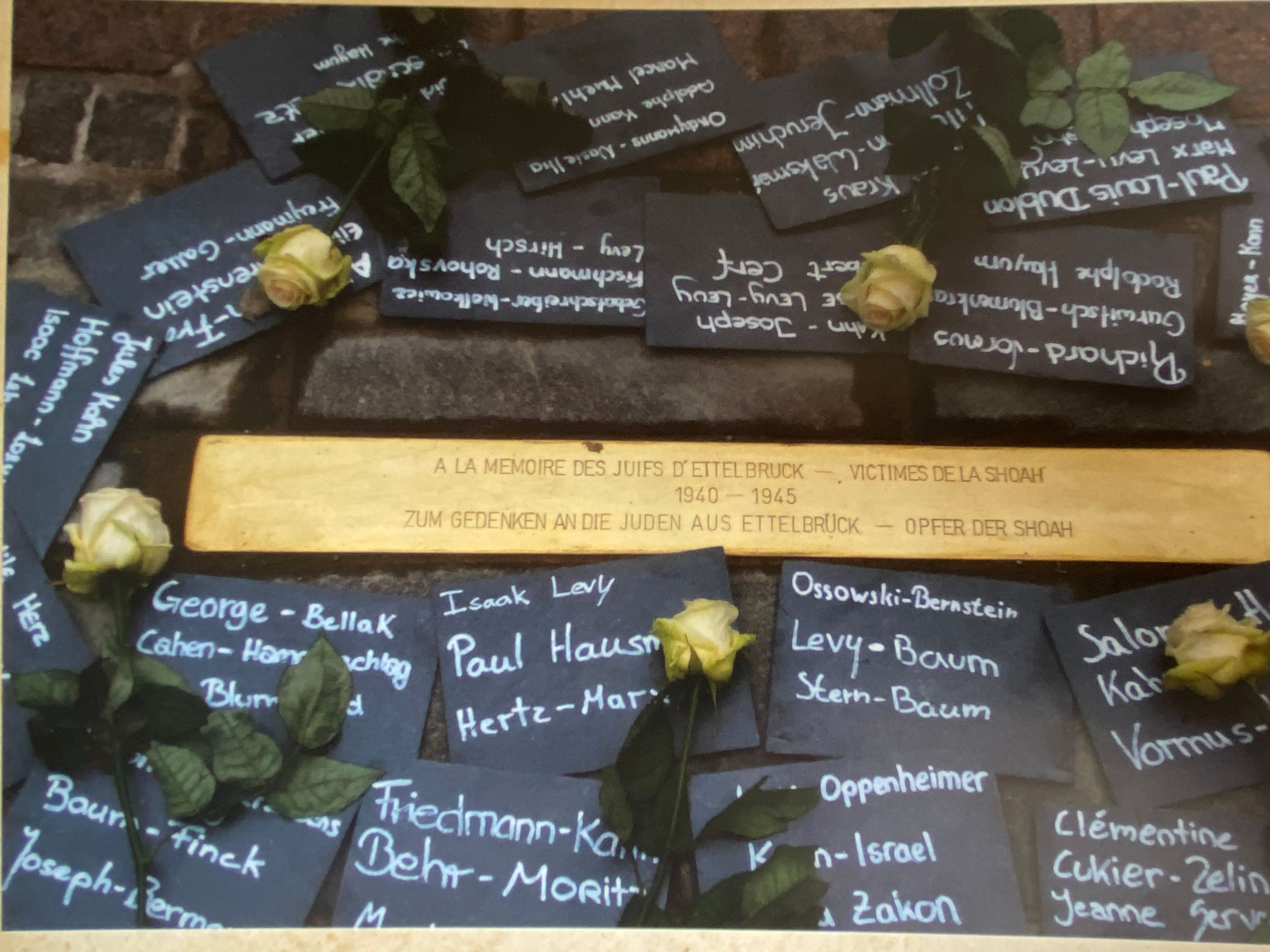
Discover a poignant tribute to Ettelbruck's vibrant pre-war Jewish community, as you walk through the historic heart of the town and stumble upon the "Stumbling sill."

In 2013, students from the Catholic private school Ste-Anne took the initiative to install a "Stolperstein", a Stumbling sill on Place de la Résistance in Ettelbruck. This memorial marks the location where a vibrant Jewish community once thrived, with numerous shops, before World War II. The Stumbling sill, a creation by German artist Gunter Demnig, is part of his broader Stolpersteine project, which commemorates the victims of National Socialism.

The Stumbling sill is a thought-provoking reminder of the rich Jewish life that existed in Ettelbruck before the tragic events of the Shoah. Its purpose is to engage passers-by in reflecting on this history, encouraging them to remember the community that once flourished here.
Opening hours

Contact

Address: Stolperstein Ettelbruck
Place de la Résistence
L-9023 Ettelbruck
Show on map

More sites

©Visit Éislek
Centre Cinqfontaines
The small village of Cinqfontaines (Five Wells), not far from Troisvierges, is home to a former monastery built at the beginning of the 20th century. In 1941 it was confiscated by the Nazis who used it as a place of internment for Jews from Luxembourg.
Find out more
©Musée de l'Ardoise
free
with theLuxembourgPass
Slate Museum - Musée de l'Ardoise
Discover the fascinating world underground at the Haut-Martelange Slate Museum! Experience the history and techniques of slate extraction and immerse yourself in the new, fascinating "Johanna" visitor gallery. Experience the everyday life of slate workers at first hand!
Find out more
©Samfaitvoyager
Bavigne dam
The Bavigne dam, part of the Upper Sûre reservoir, was built in the 1950s, requiring the relocation of mills and farmsteads. Standing at 23 meters, it guards the lake's pristine water quality. Today, as a popular diving spot, it unveils submerged remnants like bridges and a mill, echoing a rich history amid the progress.
Find out more
Saint-Roch church Insenborn
Discover the neo-Gothic splendour of the Insenborn church, built according to plans by architect Biver in 1861.
Find out more
©© Giulio Groebert
Esch-sur-Sûre dam
The impressive dam in Esch-Sauer was built between 1955 and 1958 and blends harmoniously into nature. Its arched design makes it a popular photo spot for photographers and nature enthusiasts.
Find out more
Përmeshaff – Estate ruins
Përmeshaff, a historic site near Kaundorf, traces its roots to 1195. Over the centuries, it evolved into a religious centre, attracting pilgrims to its chapel and healing springs. Despite enduring a devastating fire in 1936, recent archaeological efforts have unveiled layers of its rich history, highlighting significance of Përmeshaff as a cultural landmark.
Find out more
©Visit Éislek
Bunker Kaundorf
This bunker from World War II, where deserted forced conscripts hid until liberation, can be reached via an approx. 1 km-long footpath. The walk is well worth it, as hikers near the bunker are rewarded by an impressive view over the Upper Sûre Lake.
Find out more
©Visit Éislek
St. Cunegonde Chapel
The St. Cunegonde Chapel in Heiderscheidergrund, a noteworthy example of 19th-century ecclesiastical historicist architecture in Luxembourg, features a neo-Gothic design, late Gothic sculptures, 18th-century statues, and glass paintings, embodying the country's historical and national consciousness as the oldest Kunigundis shrine.
Find out more
©Visit Éislek
Bourscheid Hougeriicht – High justice
In the 15th or 16th century, a witch trial in Bourscheid unfolded with accusations of devilish pacts and plots against God's creation. This dark chapter mirrors a broader era of witch hunts in Luxembourg, fueled by societal turmoil, economic struggles, and the fear of a mysterious witchcraft sect.
Find out more