
©Samfaitvoyager

Bavigne dam

Where? L-9635 Bavigne

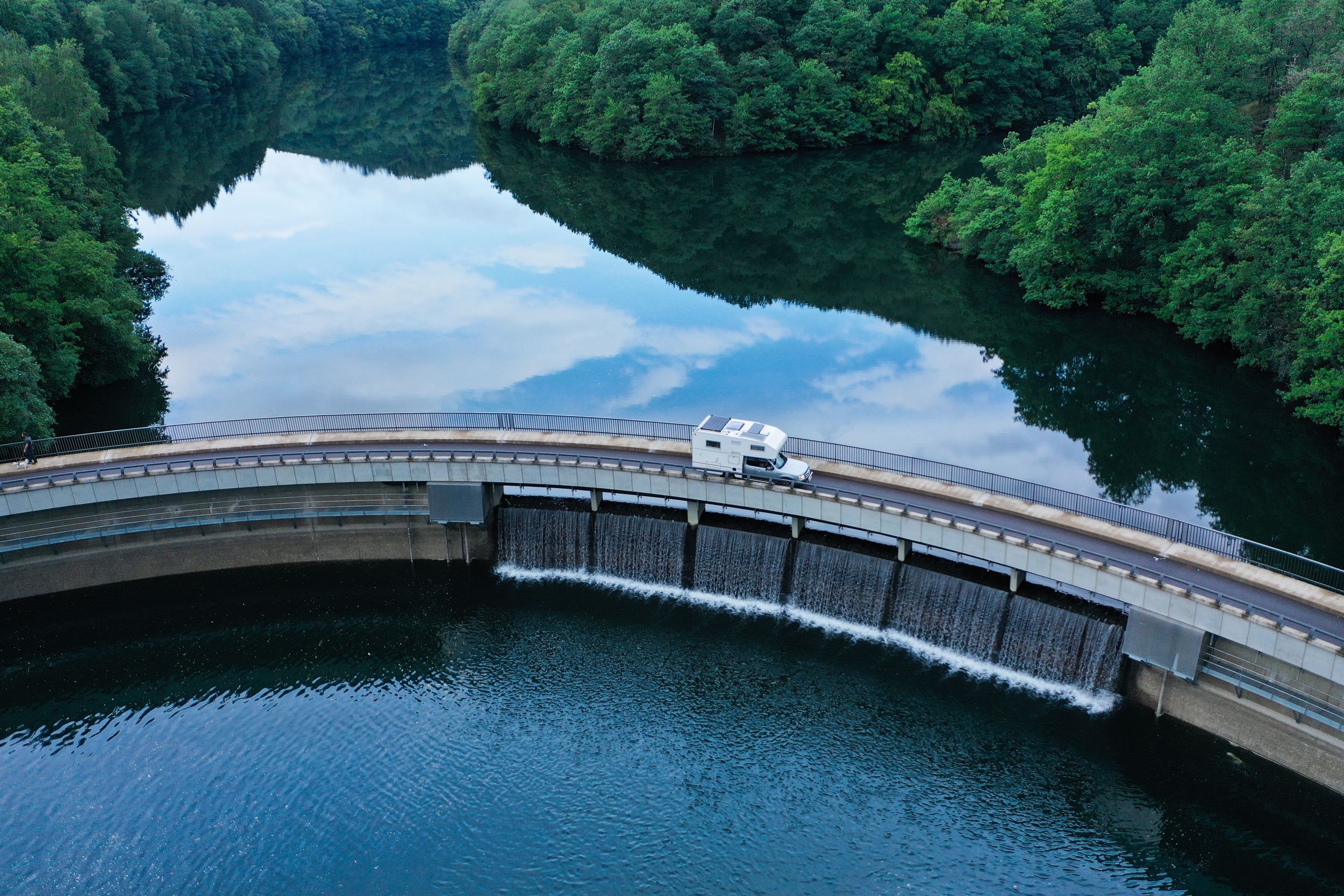
The Bavigne dam, part of the Upper Sûre reservoir, was built in the 1950s, requiring the relocation of mills and farmsteads. Standing at 23 meters, it guards the lake's pristine water quality. Today, as a popular diving spot, it unveils submerged remnants like bridges and a mill, echoing a rich history amid the progress.

The Bavigne dam, an integral part of the Upper Sûre reservoir. Constructed in the 1950s as an extension of the Esch-sur-Sûre Dam, this strategic water source required the relocation of several mills and farmsteads nestled in the valley.

To preserve the pristine quality of the lake water, ingenious measures were implemented, such as the Bavigne dams, standing at a height of 23 meters. This structure act as a guardian, preventing driftwood, tree trunks, and sand particles from entering the lake.

The construction of the Upper Sûre reservoir necessitated the acquisition of over 400 hectares of land, prompting protests and debates. However, the inevitability of progress led to negotiations with developers or, in some cases, forcible expropriation.

Today, the Bavigne dam wall and the submerged remnants of the former Loutschmillen mill, located in the valley between Liefrange and Bavigne, offer more than a glimpse into the past. As a popular diving spot, the underwater tableau includes elements like two small bridges, an old road, the mill, the waterbed of the "Béiwenerbaach" stream, artifacts like amphorae and bicycles, and even intriguing discoveries such as a pirate boat and a skeletal presence. In the dance between history and progress, the Bavigne dam emerges as both a functional necessity and an inadvertent guardian of submerged stories waiting to be explored.
Opening hours

Contact

Address: Staumauer Bavigne
L-9635 Bavigne
Show on map

More sites

©Gaul’s Legacy Tours
US Memorial Diekirch
The US Memorial located in the municipal parc of Diekirch river remembers a number of US units that were present in and around the city, September 1944 – February 1945.
Find out more
©© Giulio Groebert
Esch-sur-Sûre dam
The impressive dam in Esch-Sauer was built between 1955 and 1958 and blends harmoniously into nature. Its arched design makes it a popular photo spot for photographers and nature enthusiasts.
Find out more
©Jängel Klasen
Veiner Gare – Former Trainstation
Nestled along the River Our, the town of Vianden once boasted a unique railway connection – the "Benny Express." This narrow-gauge line operated from 1889 to 1948, linking Vianden with Diekirch's main railway, a vital step in making the town more accessible to tourists.
Find out more
Saint-Hubert Church
Discover the fascinating architecture of the church, built on the ruins of a pagan site!
Find out more
©Visit Éislek
St. Cunegonde Chapel
The St. Cunegonde Chapel in Heiderscheidergrund, a noteworthy example of 19th-century ecclesiastical historicist architecture in Luxembourg, features a neo-Gothic design, late Gothic sculptures, 18th-century statues, and glass paintings, embodying the country's historical and national consciousness as the oldest Kunigundis shrine.
Find out more
©Visit Éislek
National Strike Monument Wiltz
Visit the impressive monument commemorating the general strike during the Second World War. Learn more about the tragic events of that time that shaped Luxembourg's history.
Find out more
©Tourist Center Clervaux
The Benedictine abbey of Saint-Maurice
With centuries of history and majestic architecture, the Benedictine Abbey in Clervaux invites you to immerse yourself in the past. A place full of charm and meaning, it opens its doors to visitors on the occasion of the daily morning mass.
Find out more
Saint-Michel Chapel
The Saint-Michel Chapel towers high above Oberschlinder, surrounded by forest and accessible via hiking trails.
Find out more
©Visit Éislek
Airmen's monument
Take a journey into the past to the airmen's memorial in Maulusmühle. The wreckage of the aircraft on the ground tells the tragic story of six American airmen who lost their lives during the Battle of the Bulge.
Find out more