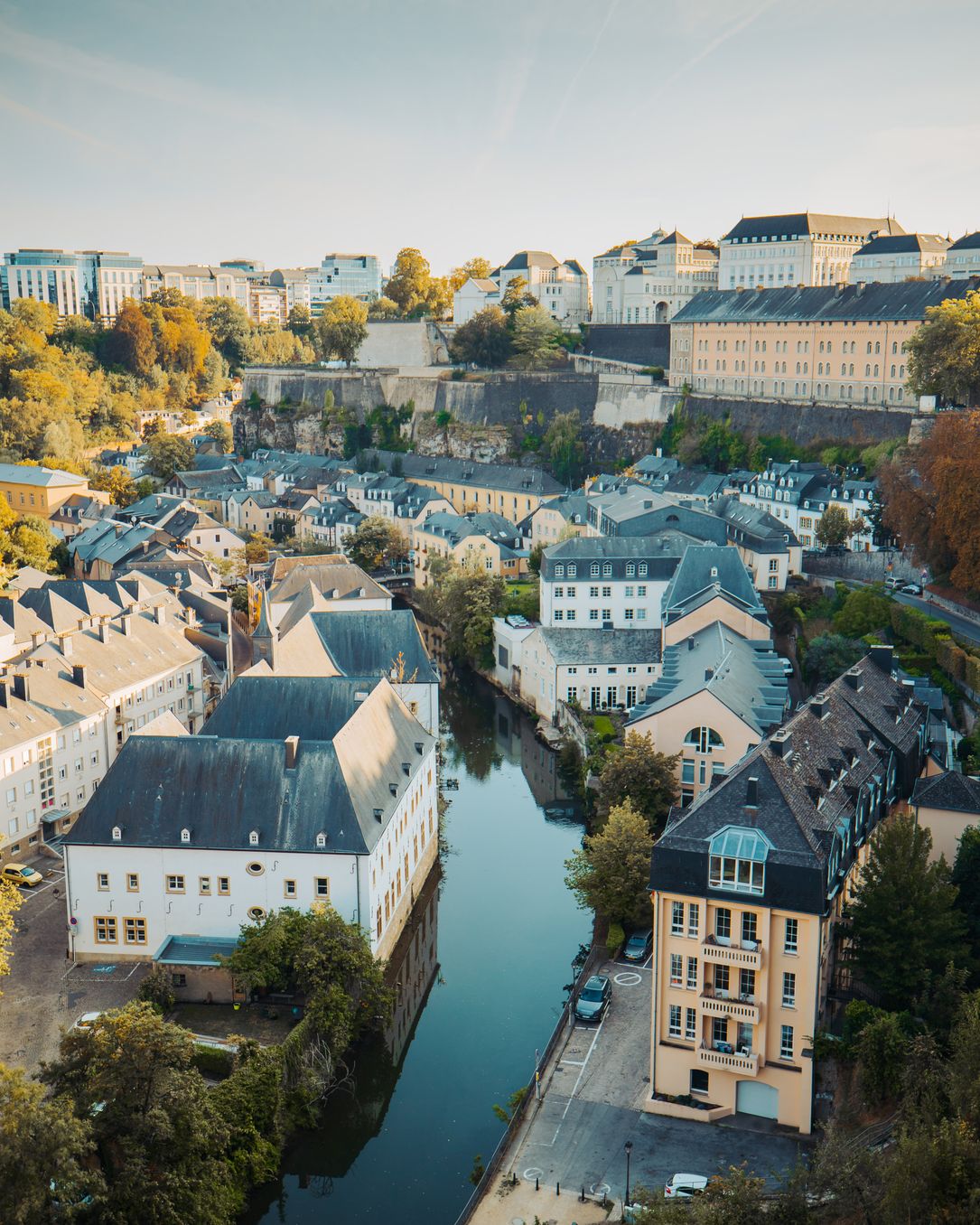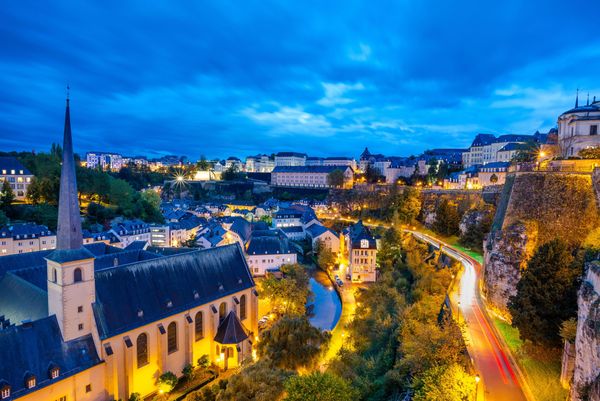
IN THE BEGINNING … The capital of Luxembourg was founded in 963 when Count Siegfried took possession of a castle situated on the rocky promontory overhanging the valley of the River Alzette called the Bock. The castle became an insurmountable fortress, which came to be known as the “Gibralter of the North.” Long before Count Siegfried arrived on the scene, the area was under Roman rule.
CHANGING HANDS… Luxembourg went through an extended period of foreign sovereignty (Burgundians, Spanish, French, Austrians, and Prussians) and regained its national independence in 1815. The Congress of Vienna raised Luxembourg to the rank of Grand Duchy when it granted ownership to the King of the Netherlands, William I of Orange-Nassau, an arrangement that lasted until 1890.
During this period, the political independence and autonomy were strengthened, and the democratic institutions were developed. The 1867 Treaty of London reaffirmed Luxembourg's territorial integrity, and political autonomy (already granted by the 1839 Treaty of London). Luxembourg was declared neutral in international affairs and this neutrality was protected by the great powers.
In 1890, Luxembourg embarked on its own dynasty when Luxembourg relinquished its ties to Holland’s House of Orange and Adolf of Nassau was at the helm.
TRYING TIMES… The Nazis invaded Luxembourg on May 10. The Battle of the Bulge was fought in 1944 and 1945 and, during this time, Hitler caused great destruction to the Grand Duchy. Luxembourg was re-liberated after the German army was defeated by American troops.
A SOLID UNION… After the Nazi occupation in 1948 during WWII, the country gave up its neutrality to join various economic, political, and military organizations such as NATO and the United Nations. The Grand Duchy is a founding member of the European Union, and was host to the first European Institutions in 1953. In 1994, Luxembourg City was listed as a UNESCO World Heritage site.
HERE AND NOW… The present monarch, H.R.H. Grand Duke Henri previously served as “Lieutenant Representant" and, in October 2000, succeeded his father H.R.H Grand Duke Jean to the throne. H.R.H. Grand Duke Henri is married to Teresa Mestre. They have five children.
Executive power rests with the Grand Duke and a cabinet of 12 ministers. A Parliament, elected by men and women over age 18, possesses legislative powers.
|